
How to Verify Textile Suppliers in 60 Seconds: Why Buyers Need Supplier Intelligence
The sourcing manager at a German sportswear brand received an email from a Pakistani textile mill. The mill claimed to have GOTS certification for organic cotton production. They sent a certificate number. They sent photos of their facility. They sent testimonials from other customers.
The sourcing manager needed to verify this before placing a €450,000 order. So she started the verification process.
First, she checked the GOTS database. The certificate number was valid. Good. But when she looked closer, she noticed the certificate was for yarn production, not fabric finishing. The mill was claiming GOTS certification for services they weren't certified to provide.
Then she checked their website. It was outdated, with broken links and no recent updates. She searched for customer testimonials. The testimonials they'd sent were from companies that didn't appear on their website. She tried to verify their export history. No clear information.
By the time she'd completed her verification, three hours had passed. She'd found enough red flags to reject the supplier. But those three hours? That was time she didn't have. She had twelve other suppliers to evaluate that week.
I've watched sourcing managers spend hours verifying suppliers manually. The ones who succeed aren't the ones with perfect processes. They're the ones who can verify supplier legitimacy in minutes, not hours, and make informed decisions quickly.
The Real Cost of Manual Supplier Verification
Here's what manual supplier verification actually looks like:
Step 1: Certificate Verification
You receive a certificate number. You go to the certification body's database. You search for the number. You verify it's valid. You check the expiry date. You verify the scope matches what the supplier claims.
Time: 15-20 minutes per certificate
Step 2: Website Analysis
You visit their website. You check if it's professional. You look for customer logos. You verify contact information. You check for recent updates. You assess their online presence.
Time: 20-30 minutes
Step 3: Customer Verification
You search for customer testimonials. You verify customer logos are legitimate. You check if customers are mentioned elsewhere. You assess customer quality.
Time: 15-20 minutes
Step 4: Geographic and Export Intelligence
You try to verify their location. You check export destinations. You assess geographic advantages. You verify regional certifications.
Time: 10-15 minutes
Total Time: 60-85 minutes per supplier
And that's if everything goes smoothly. If you find red flags, if certificates are expired, if information is missing, verification takes longer.
Important Warning
Manual supplier verification takes 60-85 minutes per supplier on average. When you're evaluating multiple suppliers, that time adds up quickly. Most sourcing managers can only verify 3-4 suppliers per day manually.
What Buyers Actually Need
When you're evaluating a textile supplier, you need to answer these questions:
Is their certification legitimate?
- Is the certificate number valid?
- Is it current or expired?
- Does the scope match what they claim?
- Are there any restrictions or limitations?
Is their business legitimate?
- Do they have a professional website?
- Is their online presence current?
- Do they have clear contact information?
- Are they a real, operating business?
Who are their customers?
- Do they serve quality customers?
- Are customer testimonials legitimate?
- What's the quality of their customer base?
- Do they have experience with buyers like you?
What are their capabilities?
- What products do they produce?
- What certifications do they have?
- Where do they export?
- What's their geographic advantage?
How do they compare?
- How do they compare to other suppliers?
- What are their strengths?
- What are their gaps?
- Are they competitive?
Answering these questions manually takes hours. But what if you could answer them in 60 seconds?

How Supplier Intelligence Works
Supplier intelligence platforms analyze suppliers across multiple dimensions simultaneously. Here's how it works:
Certificate Verification
The system checks official certification databases automatically. It verifies certificate numbers, checks expiry dates, validates scope, and identifies any restrictions. All in seconds.
Brand and Website Analysis
The system analyzes the supplier's website, checks online presence, verifies contact information, assesses website quality, and evaluates content freshness. It identifies red flags like broken links, outdated content, or missing information.
Customer Intelligence
The system extracts customer information from websites, verifies customer logos, assesses customer quality, and identifies customer testimonials. It cross-references customer mentions to verify legitimacy.
Geographic and Export Intelligence
The system analyzes location advantages, verifies export destinations, checks regional certifications, and assesses geographic stability. It identifies export capabilities and market access.
Product and Category Analysis
The system classifies products, verifies certification coverage, assesses product diversity, and evaluates product presentation. It identifies capabilities and gaps.
Trust Score Calculation
The system calculates a comprehensive Trust Score from 0-100 based on all these factors. The score reflects:
- Certificate legitimacy and coverage
- Brand presence and professionalism
- Customer base quality
- Geographic advantages
- Export capabilities
- Product capabilities
- Overall business legitimacy
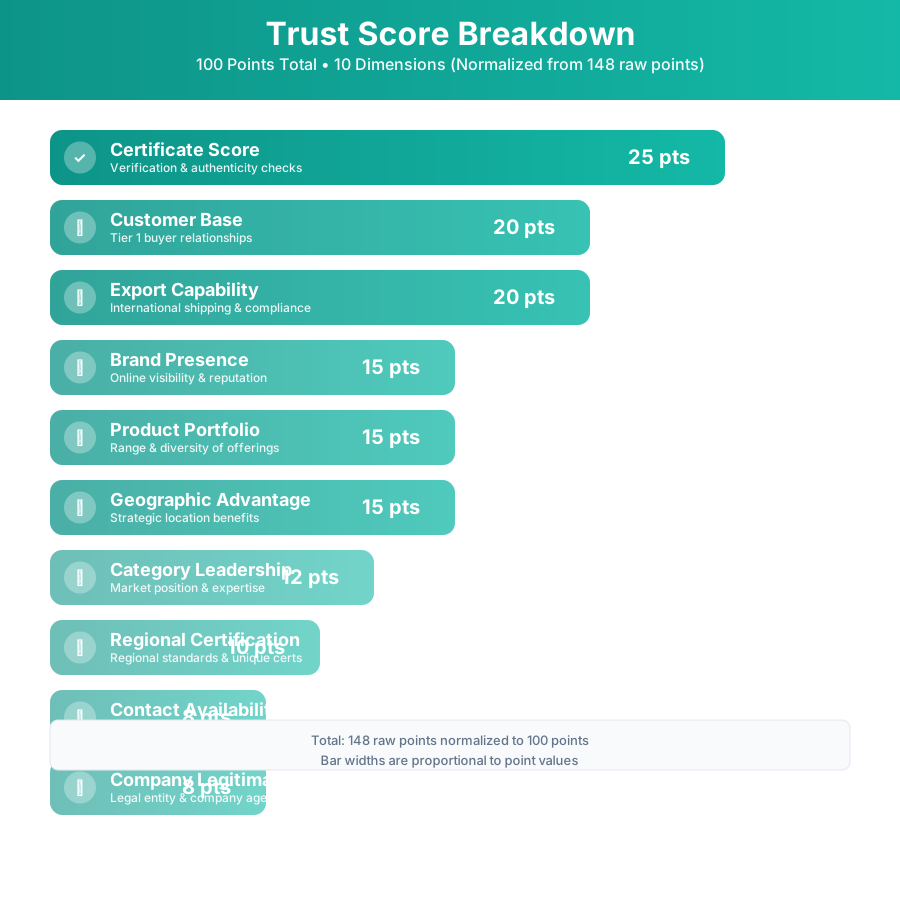
The Trust Score is calculated from 10 dimensions totaling 100 points. As shown in the chart above, certificates (25 points), customer base (20 points), and export capability (20 points) carry the most weight, reflecting their importance in supplier evaluation.
Success Story
Supplier intelligence platforms can verify suppliers in 60 seconds, compared to 60-85 minutes manually. That's 60-85x faster, allowing sourcing managers to evaluate 20+ suppliers per day instead of 3-4.
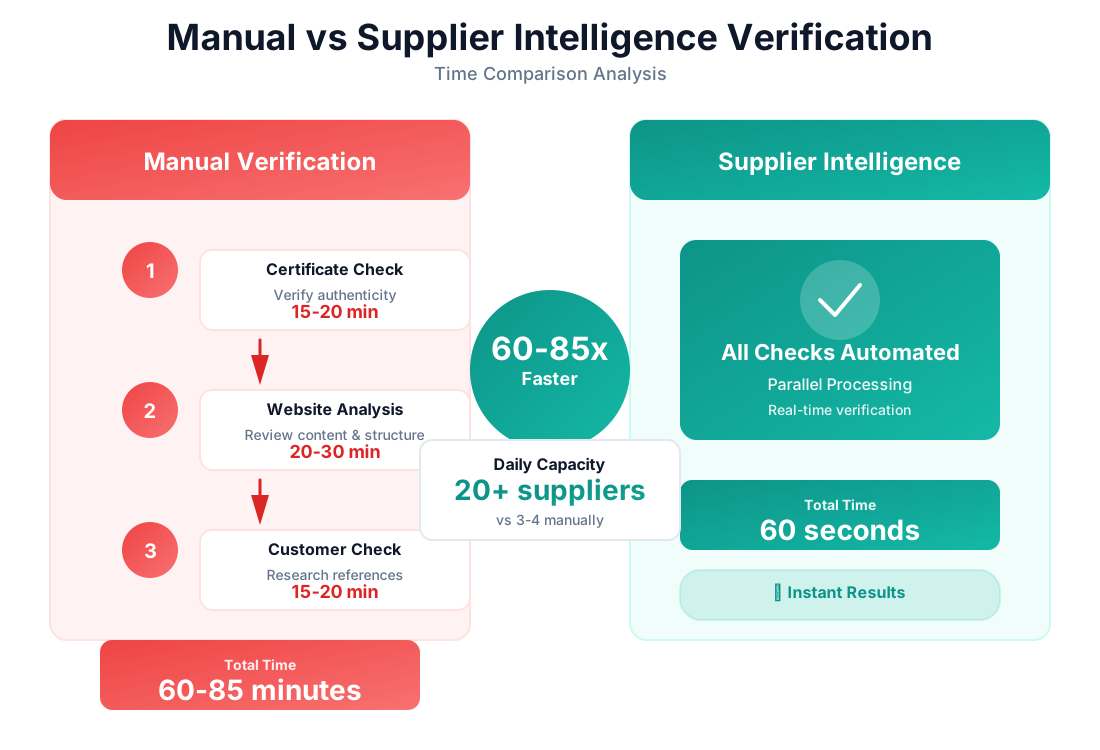
The chart above shows the dramatic time difference between manual verification and Supplier Intelligence. While manual verification requires sequential steps taking 60-85 minutes total, Supplier Intelligence processes all checks in parallel, completing in just 60 seconds.
Real Examples: What Supplier Intelligence Reveals
Example 1: The Expired Certificate
A fabric mill in India claimed GOTS certification. Their certificate number checked out in the database. But supplier intelligence revealed the certificate had expired three months earlier. The supplier was still using the old certificate number in their marketing materials.
Manual verification might catch this, but it requires checking the expiry date carefully. Supplier intelligence flags it immediately.
Example 2: The Scope Mismatch
A dyeing facility in Pakistan claimed OEKO-TEX certification for all their products. Supplier intelligence verified their certificate was valid, but the scope only covered specific product categories. They weren't certified for everything they claimed.
This kind of detail is easy to miss in manual verification. Supplier intelligence highlights scope mismatches automatically.
Example 3: The Fake Customer Logos
A garment factory in Bangladesh displayed customer logos on their website, including major European brands. Supplier intelligence cross-referenced these logos and found no evidence these brands actually worked with this supplier. The logos appeared to be stock images or copied from other websites.
Manual verification would require searching for each customer individually. Supplier intelligence checks them all simultaneously.
Example 4: The Outdated Website
A textile mill in Turkey had a professional-looking website, but supplier intelligence revealed it hadn't been updated in over two years. Contact information was outdated. Product information was stale. This suggested the business might not be actively operating.
Manual verification might notice this, but supplier intelligence quantifies it and flags it as a risk factor.

Why Transparency Matters
When you're placing large orders with suppliers, transparency isn't optional. It's essential.
Transparency Builds Trust
Suppliers who are transparent about their certifications, customers, and capabilities are easier to work with. You know what you're getting. You know what to expect.
Transparency Reduces Risk
When you can verify supplier information quickly, you reduce the risk of:
- Fake certificates
- Misrepresented capabilities
- Hidden problems
- Supply chain disruptions
Transparency Enables Comparison
When you can verify multiple suppliers quickly, you can compare them objectively. You can see strengths and weaknesses. You can make data-driven decisions.
Transparency Saves Time
When verification takes 60 seconds instead of 60 minutes, you can evaluate more suppliers. You can make decisions faster. You can move forward with confidence.
How Buyers Use Supplier Intelligence
Pre-Qualification
Before engaging with suppliers, buyers use supplier intelligence to pre-qualify them. They verify basic information, check certifications, and assess legitimacy. This filters out unqualified suppliers early.
Due Diligence
During supplier evaluation, buyers use supplier intelligence for comprehensive due diligence. They verify all claims, check customer references, assess capabilities, and identify risks.
Comparison
When evaluating multiple suppliers, buyers use supplier intelligence to compare them objectively. They can see Trust Scores, identify strengths and weaknesses, and make informed decisions.
Ongoing Monitoring
After selecting suppliers, buyers use supplier intelligence to monitor them continuously. They track certificate expiry, check for changes, and identify emerging risks.
Did you know?
Buyers who use supplier intelligence report 85% reduction in verification time, 70% reduction in supplier-related issues, and 60% improvement in supplier selection quality.

The Legitimacy Factor
One of the most valuable aspects of supplier intelligence is its ability to assess overall supplier legitimacy.
Legitimacy Indicators
Supplier intelligence evaluates multiple legitimacy indicators:
- Valid, current certifications
- Professional online presence
- Real customer relationships
- Transparent business information
- Consistent claims across platforms
- Active business operations
Red Flags
Supplier intelligence automatically flags:
- Expired or invalid certificates
- Scope mismatches
- Fake customer logos
- Outdated or missing information
- Inconsistent claims
- Suspicious patterns
Trust Score
The Trust Score provides a single, comprehensive measure of supplier legitimacy. Scores above 80 indicate strong, legitimate suppliers. Scores below 60 suggest significant concerns.
Real Brands, Real Examples
Here are examples of how supplier intelligence helps buyers verify real suppliers:
Organic Cotton Suppliers
When evaluating organic cotton suppliers, buyers need to verify GOTS certification. Supplier intelligence checks the GOTS database, verifies certificate validity, confirms scope, and flags any issues. Buyers can verify multiple suppliers in minutes instead of hours.
Sustainable Textile Manufacturers
When sourcing sustainable textiles, buyers need to verify multiple certifications: GOTS, OEKO-TEX, GRS, and others. Supplier intelligence checks all relevant databases simultaneously, providing a complete certification profile instantly.
Export-Oriented Suppliers
When sourcing from export-oriented suppliers, buyers need to verify export capabilities, geographic advantages, and market access. Supplier intelligence analyzes export destinations, regional certifications, and geographic factors automatically.
Tier 1 Supplier Evaluation
When evaluating suppliers for tier 1 customers, buyers need comprehensive verification. Supplier intelligence provides complete supplier profiles, Trust Scores, and gap analysis, enabling thorough due diligence in minutes.
Pro Tip
Use supplier intelligence to verify suppliers before engaging. Pre-qualification saves time and reduces risk. Verify certifications, check legitimacy, and assess capabilities before investing in deeper relationships.
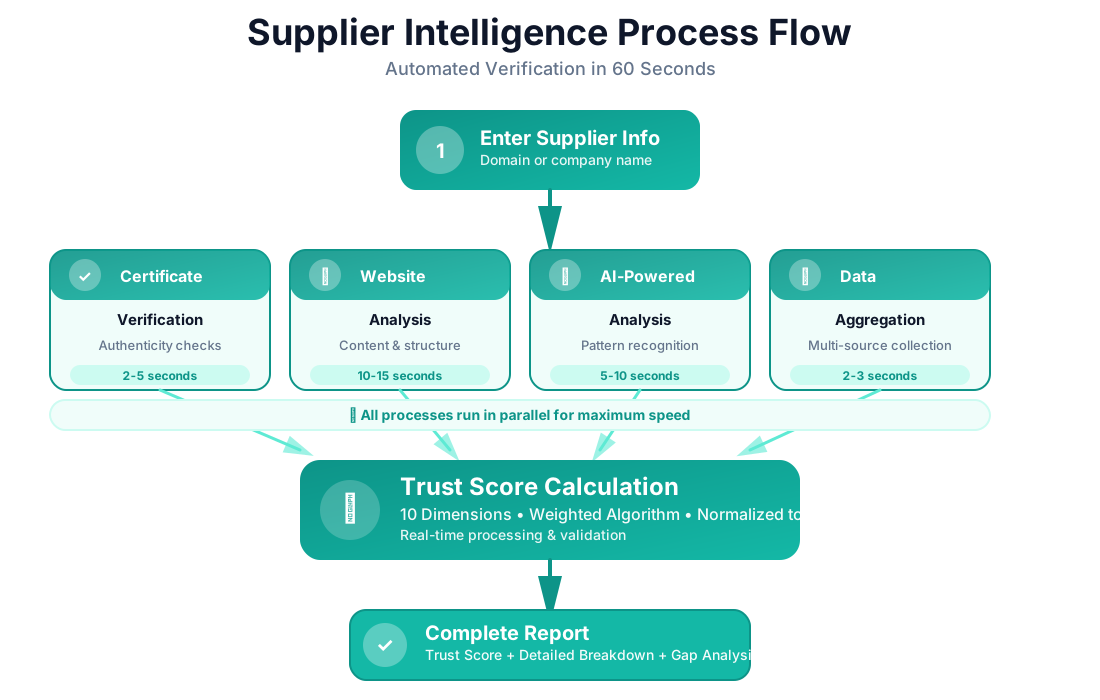
The flowchart above illustrates how Supplier Intelligence works end-to-end. From entering supplier information to receiving a complete report with Trust Score, breakdown, and gap analysis, the entire process takes just 60 seconds.
Try Supplier Intelligence Free
Ready to verify suppliers in 60 seconds? Try CertiThread's Supplier Intelligence tool free. No signup required for basic verification. Get instant Trust Scores, certificate verification, and gap analysis for any textile supplier.
What you'll get:
- Instant Trust Score (0-100)
- Certificate verification from official databases
- Complete supplier breakdown across 10 dimensions
- Gap analysis showing what's missing
- Shareable reports
Ready to verify suppliers in 60 seconds?
Try Supplier Intelligence FreeRelated Articles
Want to learn more about Supplier Intelligence?
- For Manufacturers: Why Showcase Your Trust Score** - Learn how Trust Scores help manufacturers win tier 1 buyers
- Technical Deep Dive: How It Works** - Understand the technology, algorithms, and research behind Supplier Intelligence
- Simple Guide: What Is Supplier Intelligence?** - A beginner-friendly explanation of Trust Scores and how they work
The Bottom Line
Manual supplier verification takes 60-85 minutes per supplier. When you're evaluating multiple suppliers, that time adds up quickly. Most sourcing managers can only verify 3-4 suppliers per day manually.
Supplier intelligence changes that. It verifies suppliers in 60 seconds, providing comprehensive analysis across certificates, brand, customers, geography, and capabilities. It calculates Trust Scores, identifies red flags, and enables objective comparison.
For buyers seeking high-quality suppliers, supplier intelligence isn't optional. It's essential. It enables faster decisions, reduces risk, and improves supplier selection quality.
Never spend hours verifying suppliers manually. Supplier intelligence helps buyers verify textile suppliers in 60 seconds, providing transparent, legitimate verification that enables informed decisions and reduces risk.
CertiThread's Supplier Intelligence platform provides instant supplier verification, comprehensive Trust Scores, and transparent analysis that helps buyers make informed sourcing decisions quickly and confidently.